



If you feel that something is not quite right in your relationship, where you’re constantly walking on eggshells, fearful of being chastised for not meeting your partner’s expectations, and on the receiving end of ongoing criticism and abuse, it’s possible you may be in a narcissistic relationship.
A narcissist is a term that refers to a personality style that can develop in some individuals, due to environmental factors, and perhaps combined with some genetic ones. It’s not fully known how it develops, but common experiences include childhood abuse, neglect or trauma or childhood of excessive pampering where the child is constantly praised as special and unique.
Narcissism is considered a spectrum disorder, which means that you can experience different degrees of narcissism on a continuum from mild to pathological.
Many people have narcissistic tendencies in their personality and it is not necessarily a bad trait- you can have a healthy amount of narcissistic traits that help you develop a positive self-image and high self-esteem. However, when narcissism is extreme within an individual, the clinical diagnosis is called narcissistic personality disorder or NPD.
If you’re sharing your bed with a narcissistic partner, it can be a complex and challenging road to navigate a peaceful and happy relationship.
In this article, I refer to the narcissist as he, and while the large majority of narcissists are male, these traits also apply to females as well.
Here are 7 signs to look out for to identify if your partner is a narcissist:
Sign #1: You constantly feel like you’re walking on eggshells

One of the most common feelings you experience with narcissistic people is that you constantly feel like you’re walking on eggshells. You feel like you might be summoned at any moment to discuss how you haven’t met their expectations or have disappointed them in some way. Common communication styles include the use of aggression to express anger and rage, which may also show up as physical abuse at the extreme end.
Because a narcissist has such an inflated sense of self, they often view people in their lives as objects that are there to meet their needs and expectations. As soon as they are disappointed, they will often criticise, blame, and confront you. It’s this pervasive tension that you are picking up on in the relationship that leads you to be on tenterhooks and avoid assertiveness while waiting for the next confrontation or outburst.
Sign #2: Your partner is obsessed with controlling all outcomes
Another common narcissistic relationship pattern is that they have a huge need to control situations and outcomes. Because of their grandiose view of themselves, they expect to be able to have people respond exactly as they want.
In social situations, they will often have a very clear, pre-determined idea of what they want to have to happen. If the social situation deviates from their plan, they will often react with anger and blame. The idea of losing control of a narcissist is sometimes a terrifying thought, so they will do all they can, including emotional manipulation, to ensure it does not happen.
This can show up in something as small as the guests at a party not responding in the way the narcissist expects or even with you arriving late at a function hosted by your partner. While these might be events you or I might not even register, the narcissist can experience this as a gross loss of control and take it as a personal affront.
This control may also show up in your finances. In a healthy relationship, it’s normal to have joint finances, discuss how you’re going financially, and have access to your joint funds. However, if you notice that your partner insists on controlling all the finances without letting you have access to them or knowing your financial position, this is cause for concern. It is also considered a form of domestic violence.
Sign #3: Your partner never hesitates to confront you or others in social situations where he feels he has been wronged
The narcissist’s first response is to confront, attack, blame, and criticise. The ‘Tit-for-tat’ style of communication is common with narcissists as they will finger-point and make accusations as soon as any issues are raised with them.
There is often no filter on their thoughts, and they will not hesitate to make a scene in a public setting or with friends and family. It can feel like you’re watching a toddler throw a tantrum, yet everyone stands around, and no one knows what to do.
The narcissistic person actually feels incredibly vulnerable and fragile deep within themselves. They often view themselves as damaged, unloveable, or deeply wounded. However, over time they build very strong defences and walls around this deep inner pain and struggle with giving and receiving love.
Many narcissists are even completely disconnected or out of touch with their own sense of woundedness. Part of this strong defence is layers of protection that show up through the critical communication styles involving confrontation, attacking, blaming, and finger-pointing. They often have the inability to make or sustain genuinely intimate relationships.
Because the narcissist is so concerned with control and manipulation to get what they want, they will not hesitate to criticise you or attack you for your perceived part in them not getting their desired outcome.
Sign #4: Your partner is unable to feel empathy for you and has great difficulty appreciating the feelings and needs of others
One of the most common traits of all narcissists is putting their own feelings first because they lack empathy. Again, due to their inflated view of their own self-importance, the feelings of others are not something that the narcissist concerns themselves with.
Empathy, commonly understood as the ability to put yourself in the shoes of another person, is a vital building block for all successful relationships. Over time, the lack of empathy in narcissistic relationships has a detrimental flow-on effect on the people that are close to them.
As a partner, you may feel like discussions are all about your partner’s feelings, but very little acknowledgement is made of your feelings. You may frequently be left feeling frustrated and misunderstood by your partner, and your needs have not been taken into account. You’ve probably also spent a lot of time trying to calm and acknowledge your partner’s feelings and ensure their needs are met.
Sign #5: Your partner finds it difficult to sincerely apologise, refuses to admit their fault, and avoids taking responsibility at all costs
The narcissist has layers and layers of defences that have been developed over time so that no one can hurt them or see their fragility or vulnerability. As a result, you will very rarely, if ever, hear your partner say they are sorry in a way that is whole-hearted and full of meaning. Even though they may cause you significant pain and suffering due to emotional abuse, and you may wish you were single, it is often a terrifying thought to have to take ownership of their behaviour or admit fault in any way.
If your partner has a history of intense but short-term relationships with others or a history of cutting off contact with family members and frequent fall-outs with friends, this could indicate the struggle the narcissist has in sustaining a healthy relationship, feeling empathy for others and taking responsibility for their part in relationship difficulties. It is also indicative that for the people that are close to the narcissist, this is often an impossible relationship that is too painful to sustain.
Fall-outs with friends and family members are often explosive, with the narcissist engaging in attacks and recriminations against you and others, sometimes in public settings. Many narcissists have a long list of friends and family relationships that they have terminated over the years. This is because they have significant interpersonal problems.
For most stable, happy people, it is far too painful to be friends with a narcissist, and they exit the relationship to protect their mental health. The demands, attacks, blame, criticism, and unrealistic expectations of others take their toll. Many narcissists have a large graveyard of friends and family from all the ruined relationships.
Sign #6: Your partner can fly into spontaneous rages where he abuses you and others with no remorse

A common characteristic of a narcissistic personality is that he will occasionally (or frequently) fly into what’s called narcissistic rage or narcissistic abuse.
You know this has happened because it will be completely spontaneous with no warning at all. You are often left completely shell-shocked and shaken, while your partner will continue on as if nothing has happened. This can occur in a restaurant if they feel they have received poor service or in other social situations where they feel they have been wronged by another.
There is often no awareness of how their behaviour is impacting others. Narcissists see themselves with excessive admiration and therefore expect to be treated so.
For example, they will tend to create a scene and berate waiters in public if they don’t get their food exactly the way they ordered, or publicly humiliate a door person because they are not on a guest list for a special function.
These are all seen as intolerable situations because they are not being acknowledged for the special person they believe they are and receiving the special treatment their grandiose sense of self believes they deserve.
Sign #7: Your partner exploits others for personal gain or to achieve his own ends
Another trait of narcissists is the subtle or sometimes very overt exploitation of others for personal gain. They can be arrogant and aggressively demanding to get what they want and will treat others poorly in order to achieve their goal or desired outcome.
This can show up in subtle ways, like trying to get goods and services for free or reduced. Or it may be through throwing tantrums in public settings, like restaurants and shops, to get the outcome they want or some financial or verbal apology.
The more extreme type of narcissist can even exploit fellow workers by bad-mouthing them or manipulating others in their climb up the corporate ladder.
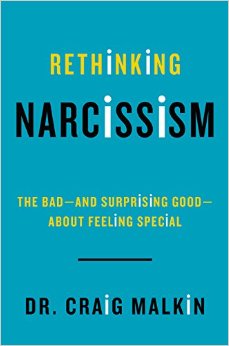
Want to learn more? We recommend Dr. Craig Malkin’s outstanding book on this topic. Click the link below to purchase it from the Amazon store.
Do you need relationship help?
If you need help with your relationship, contact Clinton Power + Associates at (02) 8968 9323 to discuss your situation and find out how we can help.
This article was updated February, 2023.

Since 2003, Clinton Power has helped thousands of couples and individuals as a counsellor and psychotherapist in private practice in Sydney and online in Australia. Clinton regularly comments in the media on issues of relationships and has appeared on Channel 7, The Sydney Morning Herald, and ABC Radio. Clinton’s eBook, 31 Days to Build a Better Relationship is available to download for free.
I think it would be helpful to also point out that some people may exhibit one or more of these signs and not be a narcissist. Such as people who have high anxiety, PTSD or came from highly dysfunctional backgrounds. Too often a spouse will read something like this and assume they have their husband/wife pegged and start throwing around a label that isn’t accurate or appropriate.
As I mentioned in the article, Narcissism is a spectrum disorder, so you can have a few of these narcissistic traits- and most people do- and function well in life and relationships. To be categorised as having narcissistic personality disorder, the DIagnostic and Statistical Manual Of Mental Disorders (DSM IV) states that you need to have at least 5 out of 9 of their characteristics to diagnose such a condition, as well as satisfy a general set of personality disorder criteria. My 7 signs is a brief overview of the 9 characteristics and not a comprehensive summary of all the criteria needed to diagnose someone as having NPD.
My husband didn’t seem like a narcissist he accused me of having these traits. Now I’m confused as to what to think.
He left suddenly after an argument and I found out later he had been
unfaithful for a long time living a double life with me. I never
suspected because he treated me as a princess and gave me everything material I asked for, even up till the very end. I found out he had a double life he was living and was planning his abandonment. He blames me for his actions and he feels totally justifyed. He left me with no friends no family and without financial independence. I’m European and I feel lost in this country on my own without him. He was my only family and I thought he loved me. He was living a double life and seems to have another personality that he kept concealed for years. We are going through divorce and he seems to have no remorse over our break up, like our years together meant nothing. His actions were very deceitful and he still doesn’t know that I have found out about his double life. He has made everyone think he left because he broke and couldn’t take it with me anymore. He has always been very affectionate with me especially in the presence of others. who now are confused about his sudden behavior. I know now that he was planning and got ready to leave me for a while. I had no clue. I’m angry, I feel used and abused and I’m in lot of pain. Has anyone dealt with a similar situation? I’m very confused and I’m grieving the sudden loss of a man I thought I knew for 16 years. I appreciate any insight anyone can give me. Has anyone experience anything similar? How do you get over this kind of pain?
Zoe,
Your situation sounds just like mine, I too was given a lot materially and I finally realized it’s only because it made him look like Mr.Bigshot not because he genuinely loved me. By accusing you of having narcissistic traits, your husband is in fact projecting onto you the unwanted, shameful parts of himself that are too painful for him to accept. The man you thought you knew and loved never existed, it was only a facade. They do not have the capacity to love and empathize, they’ll quickly discard you and move on to another victim once they realize they can no longer get their narcissistic supply from you, most importantly do not fall back into his web if comes crawling back pretending he’s sorry as they do not change. There are several videos on YouTube about Narcissistic Personality Disorder and several books on the subject. Good luck and God bless you.
Great post Clinton. I see many individuals in my practice recovering from pretty dreadful relationships with people with NPD diagnosis. Often it’s been very difficult for them to leave the relationships and they’re left with substantial trauma.
Thanks Paul. Yes, those that suffer from serious NPD often leave a trail of destruction behind them in the form of relationship trauma. I’ve also seen that it’s very hard for partners to leave as there is often a symbiosis where the other partner placates, mediates and does damage control.
I see these traits in both myself and husband…… our marriage is very challenging.
I think most people have aspects of these traits in themselves. The question is to what degree and how does it effect the quality of your life? Awareness of this character style is the first step before changing your behaviour and then your relationships.
A great article Clinton. Thanks for writing it. Vivian.
Thanks for your feedback Vivian!
my ex partner was all of the above… i had to walk away.. his family had spent years trying to help him, but he listened to nobody… he became so controlling and violent that i feared for my life… i loved him dearly and did everything i could but nothing was ever good enough… i know his family history had alot to do with why he behaved this way… his “layers” seemed endless.. nobody could get beyond his barriers… thanks for this article, it has made things alot clearer for me
I’m glad you found the article helpful and you have some clarity. It’s often true that when you’re in relationship with a narcissist that ‘nothing is ever good enough’.
I’ve had this same issue with my ex.. anything i did for her was never appreciated… it really destroyed our relationship..
Oh my sounds EXACTLY like my soon to be ex husband
I was in a relationship with a narcissist who seemed to act this way only with me. He had many friends and was well-liked because he was a very generous and thoughtful person. However, our relationship was a different story. Therefore, trying to get out of this relationship was especially confusing. Of course, I doubted myself. If he acts this way only toward me, is it because I am doing something wrong? After some time, I was able to see that even though I could not understand why he would treat me this way, it was not my fault.
The information you provide about how a narcissist feels wounded is very interesting to me, but it makes me wonder if people who feel the need to “heal their partners” could use this information to justify their partner’s behavior. My response when reading it was that I felt compassion for my ex- I know, for example, that he had a very tough childhood and witnessed abuse in my family. I have had to fight the desire to mend our relationship and “help” my ex recover from this ailment. How does someone like me curb the desire to help the narcissist resolve his/her internal conflicts?
You raise a very important point here- that many people are drawn to being in a relationship with a narcissist as it meets a need in them. As you mention, you may have a strong ‘giving and helping’ style, or perhaps there are pay-offs for rescuing your partner.
The ongoing challenge is one of differentiation, which is the ability to be OK in the face of your partner not being OK. Much easier said than done, but an important developmental challenge for all of us in relationships. And the starting point is looking at your own internal conflicts, rather than trying to ‘fix’ your partner.
This is a dilemma we all deal with in one way or another, however, it is brought to the foreground when you find yourself in a relationship with a narcissist.
Great post. It describes my father to a tee. During my teenage years I struggled with severe depression and really wanted to end my life, which I believe was the result of his behaviours which left me feeling absolutely worthless. The only way I could get better was by having little to do with him. Now in my 30s, the most I manage is a phone call once a year at Christmas. Frankly, I have learned that trying to mend a relationship with a narcissist, or feeling sorry for them (in the event that they had a difficult childhood) – doesn’t work. You will only get hurt in the end, and if it’s a relative or a partner, then you can’t help the person. They need psychological intervention, but unfortunately many do not present for treatment and according to the DSM-IV-TR there aren’t really any effective approaches to helping them anyway. Burn all bridges, I say, and start living the life you deserve!!
Thanks for your comment Sylvie. Yes, it’s true that you can’t help the person, and this is often a very painful realisation, especially when you care so deeply about the person.
I would add that there are certainly effective treatment options for NPD and long-term interpersonal and humanistic approaches have been shown to be effective, but the person has to want to change and many narcissists are so heavily defended that they are likely to not get help or if they do, they leave treatment early.
I just got out of a messy relationship. The above describes him perfectly. I knew he was hurting me and I knew how he was manipulating me but I always found myself running back to him. I felt like I couldn’t live without him as he provided me with a false sense of security.
Even when breaking up he wouldn’t stop saying how horrible I am because I didn’t want to speak to him.
Thanks for the article, I think it will help me to get over this painful relationship.
Thanks for your comment. I’m glad you found the article helpful and wish you all the best for getting over this painful relationship.
Great post Clinton ! My current spouse shows all the 7 signs – couple of them to a lesser degree but most of them to a greater degree. She never ever spares a chance to put me down in private, in front of friends, family or even children and in the end adds the phrase – ‘you men are all bastards’, no matter how much I take care of her. I had given up all my interests just for the sake that there should be peace in home – at least for the sake of children but nothing seems to please her. She makes me feel worthless and the only thing that counts for her is – “I, me & myself”.
Sorry to hear of your current circumstances. I hope you can get some support for what you’re going through. Wishing you all the best.
l agree with PG, great post Clinton, l have been searching for just the right site to show my friends, some of them have expressed to me their confusion about my bf, “on the surface an awesome guy but they sense somethings a bit off”, actually he has all 7 signs you talked about, this guys the narc from hell! One area l find that doesn’t seem be talked about often by psycs ect on their sites is the “sexual strangeness” of the narc which is the one aspect of the relationship that has personally caused me the most turmoil & has left me feeling undesirable & quite frankly down right ugly…. (never thought ld hear myself say that). lm sure others will be feeling the same, its one aspect that cuts so deep & the wounds seem irrepairable.
Wow!!!! I just broke off my relationship….she was so all the above…..I was so lost and so drained with allways being blamed for things that I knew were not my fault……I was driving myself crazy tring to make sense of her reactions and even sometimes doubting myself, thinking maybe I reacted wrong or even it was my fault…..it was so hard to comunicate with her….acually impossible……thank you for your explanation to this total emotional roller coaster I was on……brian
I finally walked away less than 2 months ago.. They don’t even know the internal damage they do to us. just like the article states… They will NEVER apologize … They will find every reason under the sun to blame you. It’s so sad. What has been so traumatizing is that I loved him an truly devoted myself to him even after all the verbal and emotional abuse. Everything was just mirage. They are pathological liars.
Looking at this, I’ve realised that a few of my past boyfriends are Narcissists. Maybe I attract them without meaning to, since I have at times struggled with depression.
But to be blamed for everything and being belittled on a regular basis was devastating.
Having them twist facts about situations and never knowing what to believe made me feel like I was the one with the problem. But now I realise that I didn’t “deserve it” and it wasn’t all my fault, this has been helpful towards allowing me to let go of all the emotional scars that they have left me with.
It has put me off ever being in another relationship again, but the funny thing is they moved on so quickly, even cheating on me because I wasn’t providing them with the adulation that they craved. They then used that as another thing to say that I’m the problem and they’re perfect. When really they just can’t stand to be alone and not have anyone around to put them on a pedestal.
It’s funny how you stumble across information like this when you’re troubled but not exactly looking for this sort of info. I have just read this because of some one elses post on facebook which led me to look up what a narcissist is. About 2 years ago I saw a counseller because my mariage has been exactly like walking on eggshells and forever being downtrodden, blamed, verbally abused, controlled and manipulated, and always sorry, not just for my percieved actions but also my families and friends, which I don’t really have any contact with anymore in order to try and keep the peace. I have seen her make and break continually with her brothers and sisters and “friends” it’s actually draining and I have been suffering from depression for many years now. I have always been of the mind that I will not give up on her, that if I try and lead by example that she might come around. At times I feel like she is making progress and I don’t even know if she is seeing someone about it or taking medication, I don’t want to undo any progress by asking. When I saw a counsillor because the relationship was at a stage of exploding, his advise was not to label her but to try and see the positive side of her and compliment her etc. I tried but at times I felt like I was just makin stuff up, and I think she knew it. It is back to a dangerous level again, and I just can’t, as much as I think it would be the best thing to do, initiate a break up. It’s not just her thats involved, as we have a child with special needs, and I know that it would have a devastating affect on the child as well as myself, I could never abandon the child! So what to do? I very often think that an easy way out would be to top myself but I would like to think that I would never go that far. From reading your article I am sure I have some narcissism in me as well, however I think alot of it has been knocked out of me!
20 years of marriage to a man who had me convinced I was the problem. NOTHING I did was good enough. I walked on eggshells, and inadvertantly fed his every whim. I had no idea that he was a narcissist. I divorced him last year, and it’s been hell ever since. I’m trying to learn how to deal with him now that I am aware. We have 3 children, so he is still causing terrible trouble. Thank you so much for this site. I can’t continue to deal with him in the same way. Hopefully coming here will help.
My ex husband was that way,I thought he was bipolar.It started right after we got together.Everytime he got mad he would yell at me.And it would always be my fault.If I fixed him his medicine he would accuse me of treating him like a child.If he had a bad day at work he would come home and yell at me When his truck broke down he would be outside trying to fix it and if he couldnt get something right on his truck he came in throwing stuff and blaming me cause i wasnt out there helping him.I was so afraid to say something to him.And nine times out of ten I would apologize to make the situation go away and it still didnt work.He would follow me all over the house.I went to the bathroom and locked the door and he was outside the door hollaring at me.I never knew when he was going to have an out burst.never knew when it was going to happen.I was so tired.All I did was cry the whole time we were together.I was tired all the time,Like I was drained.When he would start I would walk away.He would follow.I hated christmas with him.He made putting up the tree hell.Every christmas when it was time to put the tree up he would get mad cause I was going fast enough or I wasnt putting the lights in the direction he wanted them to go.So the fighting started.He would just never quit.It was always my fault.I just couldnt seem to make him happy.No matter what I tried nothing worked.We were together for 6 and a half years until he met some woman on the internet and left me and our son for her.
I can relate. They make everything a problem! Even the things that are meant to be enjoyed turn into an ugly scene. When I read about the Christmas tree, it hit home. He ‘took over’ everything and was impossible to please. He had some need to control even the smallest details and it was never in a pleasant way. On the edge of anger all the time, even when drinking and that was every day. I don’t know how or why I put up with him for so long. He’s a very mean man with major problems.
UNREAL! I just read the exact description of my ex of 6 months. I ended it and he moved out 6 months ago. However…we share a 7 year old girl that lives with me. He is making some very poor choices re: my daughters best interests. IE….exposing her to a brand new gf. My poor girl sees her dad only every 2 weeks (his decision) and now she shares the entire weekend with her dads new gf. I am soo incredibly sad for my daughter. I voiced my concerns….but he just got mad and said its none of my business what he does when he has our daughter. VERY selfish. :(( I may have to cut off staying the night as he has his new gf sleep there and my daughter sees this. It’s waaay too soon. She just met her:(
I too walked on eggshells, appologized, and always made peace with his kaos. No more! No more barking..taking his orders and taking his emotional and verbal abuse!!
Thank you for writing this Clinton.
K in Canada
This article describes my ex boyfriend perfectly. Being with him was emotionally draining because I never knew what to expect. He belittled me constantly, would give me the silent treatment whenever he felt slighted, wouldn’t allow me to voice my opinions or concerns and was extremely manipulative. He knew that I am Bipolar and would dismiss my illness as if it were a character flaw while at the same time act as if he were concerned about me taking care of myself. And then one day he dumped me for what he perceived was a violation of his trust despite that fact that he violated my trust on numerous occasions and not once did he apologize..he didn’t believe in apologizing..that’s what he told me. He also told me that he didn’t believe in compromising or working things out. That’s the thing about Narcissists..they don’t believe they have a problem..it’s everyone else that has the problem.
He’s destroyed my self esteem which was already fragile to begin with due to my illness. I am at the point now where I do not want to get involved in another relationship. I’m afraid to trust another man because I do not want to get my heart broken again. I truly loved this man and he took full advantage of that. I’m pretty sure he’s moved on to his next victim by now.
Wow I feel like you just described my ex boyfriend to a T! He never had violent outbursts around me but pretty much everything else in this article explains him. Tina, I have been crying for over a year for this man who put me through everything you went through. I have never loved someone so deeply in my life but I’m tired of being blamed for everything he has done to me.
Nikki, how you have been feeling is perfectly understandable and given the damage that he’s done to you it will take time for you to heal but whatever you do, you have to believe that you are not to blame for anything that happened in your relationship. It’s very hard to let go of a narcissist because it’s hard to believe that the person we fell in love with is such a cold and calculating individual. If you are still with him, you need to leave him because it’s going to be a never ending cycle of abuse and pain. He will not change. If anything it will get worse over time. If the relationship has ended it is very crucial that you don’t get back together with him. Do not have any contact with him whatsoever. He’ll say all the right things to reel you back in but then the mask will come off and he’ll go back to displaying all of the signs that Clinton mentioned in this article.
This is very similar to my experience, I too cried for over a year over him, when I didnt understand what had occurred. I too was deeply in love with him and he could just cut off and erase me like I didnt exist, and no care to see how I was. He did not even know if I was dead or alive. Very painful, and a huge part of that is being devalued from being loved to zero existence.
What the hell is going on here! do these guys all own the same handbook or are they all the same person? every time I read one of these posts it blows my mind without exception. My heart aches for you Tina cos unlike them we do have genuine feelings for others, l used to think l was so lucky to have found such a wonderful, loving man with looks that would knock ya socks off, now l think hes just a liability, actually l recon the common feeling in us all is “what a waste”. Keep reading Tina it really helps!
I just finished a relationship and my ex-girlfriend fits to some 5 points out of these 7. Narcissist rage, public scene encounters which leave everybody shocked, constant blames and criticism, aggressive and violent behavior, constant verbal abuse towards others and an omnipotent way of perceiving oneself. I suffered during all the relationship but I also loved her very much. Due to her bi-polar nature she also had a good side; she could be really sweet and caring, even humble sometimes. The decision to leave her was one of the most difficult in my life, she was begging on her kneels that i would not leave her. I guess that many people stand somewhere in between narcissistic disorder and normal narcissism. You just have to decide whether his/her behavior is something you can bear in a long term. You can also ask yourself that are they even possibilities of a happy relationship. In my case there wasn’t
mmmm…i read this and think that maybe I have some of these traits but not anywhere to the extent mentioned…. I would really interested to hear about the effect that depression and anxiety may have on a person who thinks that they are living with a narcissist??? I think that my wife thinks that I am a narcissist…My wife has had mild depression since our children were born and always seems to be on edge and confused…she really struggles to be able to concentrate or cope with more than one thing at a time and blames me for having too many things on the go and ambushing her with things, even simple things like dinner and washing….she is really forgetful and always says I don’t discuss things with her when 9 times out of 10 we have talked about a day or a week beforehand…I feel that some of the traits above sort of describe how I am but only for the fact that I I don’t get in and do most of the things around the house, nothing would get done…I try to lead by example and just get things that need to get done finished but some times I feel that it is now just taken for granted that I do these things….not deliberately, just because she doesn’t even realise….
Since I’ve left my partner my eyes have been open to his narcissism. I have been on eggshells and in constant depression. Since leaving that has completely changed. I finally have self confidence again and feel like I’m worth more and deserve more. We have 2 children together and I have decided my children deserve more as well. This has been a long hard road because I do care for him deeply but since I’ve left he has continued to blame me and do nothing that I’ve asked him to change. I see now that he never will.
This described a previous relationship. Very charming at first. Confident, intelligent and well spoken. Then….many broken promises. Rarely made ‘plans’, always called last minute and canceled last minute as well Never invited me into his home. Criticised me about the smallest things. At first he would pay for dinner/drinks. Then he stopped. I never knew if what was the deal with this man. It seemed a mystery on whether or not we would see each other. Even if I attempted to make plans he would leave me hanging during the time he needed to make a decision and yet again say yes or no last minute. We would only see each other at my place. Once he got upset and slammed my freezer door, only because he was bragging about how if he said he would do something he would always do it. I think my facial expression gave away my thoughts and he questioned me. I answered him with the fact that he had backed out of plans I had attempted to make. When he couldn’t deny it he slammed the door and turned it into something it wasn’t. Accusing me of wanting to control him. What??? Another time he got really upset while out one night. A man I knew for years from work came over to say hello and gave me a hug. He stormed off and called a taxi for me and said I had to leave. What????? Later he invited me to come along on a trip (of course I had to pay for myself) last minute he tells me it might not be a good idea. When I had the chance to tell him about the expense I made for nothing he tells me he didn’t know I had made travel arrangements. What??? He canceled on me 2 days prior to making the trip. Of course he knew. We had talked about the trip in detail, where we would go, what sort of things we would do. Yeah, after that I got tired and good thing he moved away. Frankly I didn’t really have a choice to break up. His move was a blessing in disguise!
It did take me sometime to move on. I was still thinking he might have had scars from a failed marriage. I wanted him to know he could trust me and hoped he would see that. I know better now, nothing I could have done would have resolved this man’s narcissism.
The relationship only lasted a bit over a year. Several years have passed and he has attempted to contact me many times. I’ve ignored him. I’m thinking his friends have grown tired of him and they are disappearing on him. Since I didn’t really tell him to go to hell, he, in his head thinks all is good. Yeah? Well, no, not for me. He must be lonely now and only has use for me at this low point (I’m assuming). Don’t care anymore and glad to be free of his spell.
As i write these words, i feel my heart is going to explode with all the pain of being coldly discarded, as if i never existed or lived with my exgf. We split in march after nearly 3 years. My close platonic female freind gone within the first few months. Explosive alchol fuelled outbursts. Being ignored and disrepected at a party and then after challenging her, thumped. Pressure to end freindships, being told she didnt love me during an episode and hardly an apology or sorry the next day. Walking on eggshells, knowing she could flip out if i said the wrong thing. Yet in public sweet charming, a great listener, always amibicable, quite different to her private nature. Yet somewhere within me my gut said, who is she, the sweet girl i love, or the very angry person cruel and vindictative, waiting to attack my heart again. The paradox being i loved her so much, yet nearly 3 months and nothing, just silence. My family and freinds say lucky escape, but boy do i miss her. And i am an emotional wreck, a shadow of my former happy go self, sound familiar?
Oh Bob that’s so sad to hear, that was a few months ago now, l hope youre doing better, its a hard thing to explain to others who haven’t known the devastation of a narcissistic relationship, like how is it they can belittle us, devalue us & our families, deny us our dignity, hold us in such low regard & generally treat us like dirt & still we love them! WHAT THE HELL!! & if that’s not enough, when weve taken all we can & actually get the guts to leave, we miss them & their lives so badly that one kind ,loving word from them & hey presto back we go!…….l feel like l am constantly being betrayed by the one person l should be able to trust the most…ME!
My partner leaves me whenever we have even a small disagreement,if I ask him something he doesn’t want to be asked he tells me “stop now or I’ll leave” and when he goes he stays in his own house and doesn’t contact me for 3-4 days. When I eventually make contact (as I always do) sometimes he ignores me..sometimes he replies and says he left because I was ‘scrappy’ and will return when I’m ‘not scrappy’ …this has been happening very regularly lately…one every 3 or 4 weeks to be precise…i’m at the end of my patience and very close to ending it…we were supposed to be getting married in a few months..is he a narcissist?
WOW it al makes sense the cheating on me for 8 years while I was yelled at for even talking to a co-worker. Saying the whole time that she cheated on me because she was so hot and I was so nasty. DCF taking our kids and her constantly saying everything was my fault and if she left me she could get kids back. Telling me I cannot talk to family and friends. Constantly belittling me and calling me names. Filed a restraining order and kicked her to the curb blocked her phone number and guess what I got my daughter back!
I’m at this page for all the same reasons. My boyfriend of 16 years is a classic narcissist. I caught him cheating and confronted him and threw him out. He was mad and didn’t want to leave. Now I see, the rage, the pomposity, the anger towards my children and other family members, inflated sense of his own attractiveness, refusal to ever “lose” an argument, on and on it goes. What I want to know right now is how does a Narcissist get treatment? Is there hope?
My question for folks to pose to themselves if they feel that they might be in a narcassistic relationship is “how can you say you love me, when you don’t even like me as a human being?”
I’ve read this article a few times over & over again just to make sure that I am actually in this kind of relationship & as the days go by he only proves that I am. I have foolishly tried to help him “heal” or change but its to no avail. I have found that I have only changed myself and not in a good way. I find myself backing down from a simple argument where I voice my opinion and because it isn’t to his liking he gets defensive and attempts to convince me that I am wrong and ignorant. I’d like to see an article on how to heal from being in this type of relationship; when you have lost part if not all of your confidence and self-esteem. After a while you start to question…”Is it me?” “Am I not good enough?”
I am married to a man that I can honestly say fits the description 100% of a narcissist and I have tried for over 20 years to try and I see that I am losing all confidence and self-esteem for myself because of him. I do ask all the time of him how can you say you love me when you dont even like me and everything that has happened is my fault? Im not his problem and I need help making my heart and mind understand that to strengthen myself to remove myself from him being part of my life forever if this cant get better. I need someone to talk to that understands him and what I deal with because the average person thinks everything is great and I am crazy.
Yes Huntress i am better. My ex i found out ran off with married guy few weeks later and when i bumped into her, asking if there was anyone else, she lied to my face. She went off 2 weeks after visting and telling me she loved me. Weird thing was, the sense of, is this really happening to me, after all we had? I always had a sense she was handling me, mangement style. On paper a bonafied loving gf, but in reallity calcualting her next move. But time wounds, all heals.
shew…. I feel like a lot of this description applies to me. I’m not a megalomaniac … and I know the world does not revolve around me…. but I do share strongly some of the traits above. I do want to control outcomes….often. And I get angry, and not shy to publicly reprimand people when I feel wronged or poorly serviced (ouch …that waiter example is very familiar)
I guess I have some of these traits …strongly so. I need to manage this.
I am currently feeling so fragile I could break. My boyfriend has so many of the above traits. It doesn’t help that I am a passive and non confrontational person so that means he states all this needs and how I am meant to fill them and I never get a say, I feel I am disappearing. My latest example is that my dad who has MS and has been ill was given tickets to see Dolly Parton in the Hunter Valley by my elder sister. Since he had a fall recently she can’t take him on her own and so she needed help. I offered to come along and help and my partner said he wanted to come too. The next day he said I needed to organise what time we would be leaving and that if my dad or sister said any time before 11:00am I was to tell them that we would leave no later than 1:00pm. This didn’t suit my dad or my sister as it takes 3 hours to drive to the Hunter. I felt so anxious about telling my partner this news so I wrote an email stating that I was sorry but that they wanted to leave at 10 and it wasn’t to make things difficult but that we wanted my dad to have some time to enjoy himself up there. He emailed back one line “You tell them 10:30 and this is NOT up for discussion”. Then he asked me what time we were going to leave the next day and I said I wasn’t sure. He just texted me saying “I hope your sister is not planning on hanging around on Sunday. I want to leave earlyish, You might want to find that out otherwise we will have problems”. I feel so heart broken and sad but so scared to leave him as I don’t want to hurt him. He was physically abused by his step dad when he was young but I am losing my sense of self and I feel like I can’t stand up to him. He does so many other good things for me like told me I could quit my job if I wanted even though it would put a strain on our funds and other things. What I want to know is how to leave because even though I have friends and family urging me to it doesn’t seem possible but I can’t explain 🙁
Alice, whatever you do, do not quit your job. This will be one more way for him to feel power over you for control. This person causing separation from your Dad and family is not good for you. ( I know it’s hard to digest, I’m with a person now who matches the first 5 signs to a T) I too have family and close friends who tell me ” She’s not good for you “. I need to cut this off, but out of fear, I don’t. Fear of being alone, as well as all the usual excuses Hopeless Romantics make to stay in a crap situation. That definition becomes more and more clear. Romanticizing a hopeless situation. We expect great results from a horrible decision don’t we ? Be strong, have Faith…. ask God to guide you.
I understand.. im in the same boat. I love him but its physically painful to be in the same room as him.