


In his book Wired for Love: How Understanding Your Partner’s Brain Attachment Style Can Help You Diffuse Conflict and Build a Secure Relationship, American author and psychotherapist Stan Tatkin speaks about how a partner’s attachment style can affect the way a person deals with conflict and their ability to form a secure relationship.
Key takeaways:
- Wired for Love guides you through understanding your partner’s brain and promoting love and trust in a romantic relationship, even if you fear intimacy.
- Stan teaches 10 scientific principles you can use to avoid triggering fear and panic in your partner, manage your partner’s emotional reactions when they do become upset, and recognise when the brain’s threat response is hindering your ability to act lovingly.
- By learning to use simple gestures and words, readers can learn to put out emotional fires and help their partners feel more safe and secure.
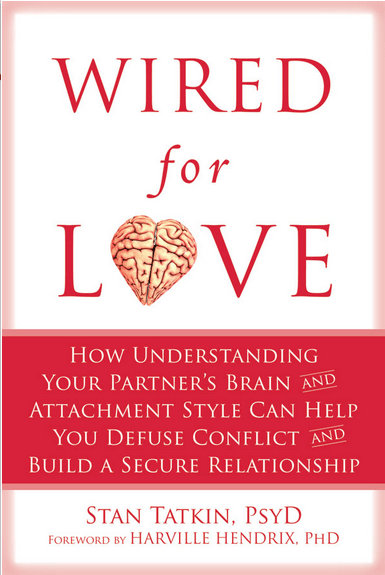
Learn How Your Brain is Wired for Love in This Compelling Book from Stan Tatkin, PsyD
This book’s no-fault view of conflict encourages readers to move past a “warring brain” mentality and toward a more cooperative “loving brain” understanding of the relationship.
Based on the sound science of neurobiology, attachment theory, and emotion regulation research, this book is essential reading for couples and others interested in understanding the complex dynamics at work behind love and trust in intimate relationships.
Wired for Love: The 3 Categories of Attachment Styles
In Wired for Love, Stan classes individual attachment styles into 3 categories: islands, waves, or anchors.
We all fit into one of these categories based on how we tend to respond in our relationships. Here’s a summary of the different attachment styles as described by Stan:
Characteristics of Islands
 People who are islands tend to:
- like to be alone, enjoy their own space
- have been raised to be self-sufficient and tend to avoid people
- learn early on not to depend on people
- often feel crowded in intimate relationships
- be in a world of their own
- self-soothe and self-stimulate
- find it hard to shift from being alone to interacting
- under express their thoughts and feelings
- process a lot internally
Characteristics of Waves
 People who are waves tend to:
- feel a great deal with their emotions
- have strong attachments in childhood, but they were inconsistent
- have helped soothe a parent or both parents who were overwhelmed
- have felt rejected or turned away by one or both parents
- focus on external regulation– asking others to help them soothe them
- find it hard to shift from interacting to being alone
- overexpress and like to talk about all the details
- stay in close physical contact with others
- often think they are too much and nobody can tolerate them
Characteristics of Anchors

People who are anchors tend to:
- come from a family where there was an emphasis on the relationship
- have experienced justice, fairness, and sensitivity in their family
- love to collaborate and work with others
- read faces and voices, and deal with difficult people well
The Brain Primitives
Primitives within the brain are concerned with
- keeping us alive and survival above all else, i.e., ‘shoot first, ask questions later’
- very fast responses that are automatic and unconscious
- reactions that don’t require a lot of resources
- memories from the past being triggered by current events
- identifying what looks good and what doesn’t look good
The Brain Ambassadors
- making logical and rational decisions
- thinking from an adult perspective and weighing all the options
- logical thought and making sense of difficult situations
- all higher functions of the brain, including complex negotiating and reasoning
Stan’s Tips for Fighting Well in Your Relationship
- fight friendly- say something reparative or friendly within a fight, e.g., “I love you, honey”
- face your partner directly and make good eye contact while fighting
- avoid asking questions, but make quick statements that help release tension between you e.g., “Honey, let’s grab a bite to eat and come back to this later”
- repair your fights quickly to reduce the creation of bad memories that get stored in long-term memory
“Wired for Love” by Stan Tatkin, PsyD
If you want to buy Stan’s book Wired for Love, click here.
Do You Need Relationship Help?
If you need help with your relationship, contact Clinton Power at (02) 8968 9323 to discuss your situation and find out how he can help.

Since 2003, Clinton Power has helped thousands of couples and individuals as a counsellor and psychotherapist in private practice in Sydney and online in Australia. Clinton regularly comments in the media on issues of relationships and has appeared on Channel 7, The Sydney Morning Herald, and ABC Radio. Clinton’s eBook, 31 Days to Build a Better Relationship is available to download for free.